

‘It Was Interesting to See How Our Chinese Colleagues Work’: HSE Researchers Take Part in Hefei Summer School


This summer, Diana Sukhoverkhova, Daria Mazur, and David Kagramanyan, research assistants at the MIEM HSE Laboratory for Computational Physics, spent five weeks in China. At the Future Scientist Exchange Program (FuSEP) summer school in Hefei, they worked in new fields of science together with their Chinese colleagues. HSE's promising scientists spoke to the HSE News Service about their intense and productive time in China.
The FuSEP Summer School is supervised by one of the top technological universities in China—the University of Science and Technology of China (USTC). The university’s numerous campuses resemble small towns with shops and cafes, where students can pay with a special pass card.
The school programme included lectures and workshops on high-energy physics, chemistry, and cosmology. In addition, each participant joined a laboratory, was assigned an academic supervisor, and carried out research projects.
The participants also enjoyed an eventful cultural programme—they explored the city of Hefei, went on an excursion to Suzhou, rode Alipay electric mopeds, visited Chinese theatres, and walked around Shanghai.
All three research assistants of the MIEM Laboratory for Computational Physics are also first-year doctoral students of the Doctoral School of Engineering Science (School of Applied Mathematics). Diana Sukhoverkhova studies on the ‘System Analysis. Mathematical Modeling. Information Technologies’ programme, Daria Mazur on the ‘Condensed Matter Physics’ programme, and David Kagramanyan on the ‘Mathematical Modeling, Numerical Methods, and Software Systems’ programme.

Diana Sukhoverkhova carried out a project on the application of machine learning to classifying topological phases. ‘The idea of the project was to use my experience in applying machine learning to the analysis of phase transitions (which I do at HSE University) to the experimental data provided by the laboratory,’ said the researcher. ‘It was difficult to take in so much new information, because work on the project overlapped with the difference in time zones and cultural features that I had to get used to. But despite this, I had a lot of interesting experiences, gained new knowledge in my field, and the change of environment inspired me to continue my current research and pursue science.’
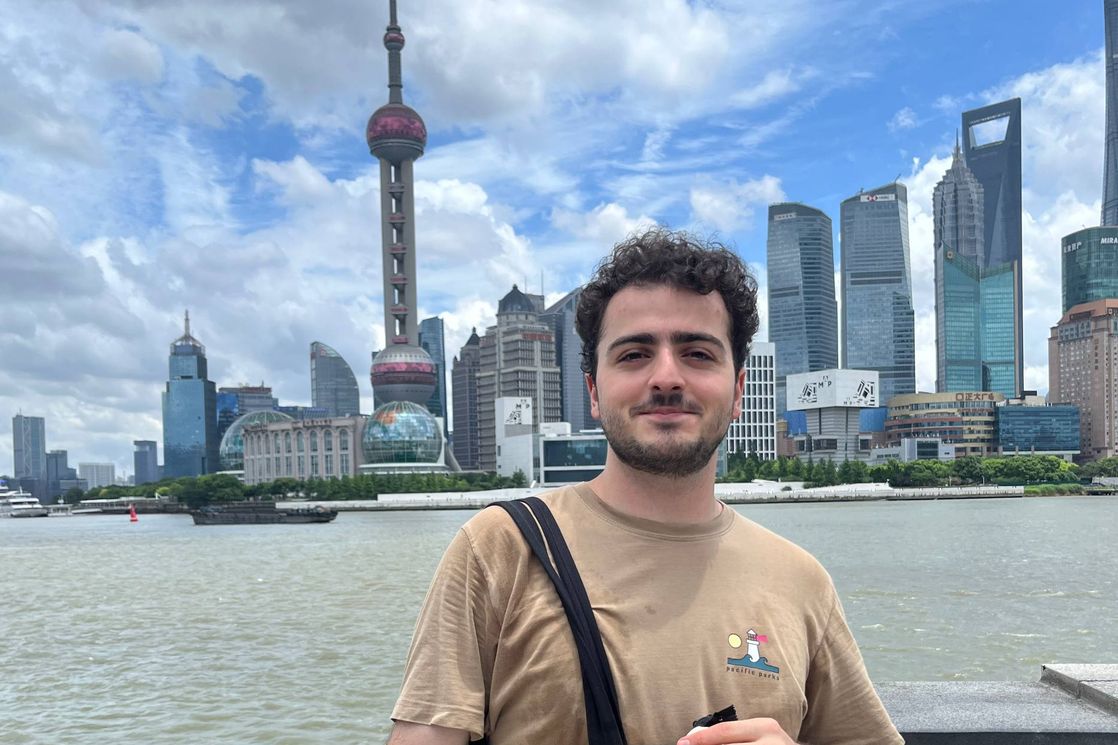
Every morning of the summer school, David Kagramanyan and his colleagues went to the Science Island at 7 am. ‘Laboratories dealing with plasma physics, machine learning, chemistry, and thermonuclear energy were located on the island,’ he said. ‘I worked at the laboratory of intelligent machines, where I solved problems of thermal conductivity for Bitter magnets using machine learning. It was complicated. For example, for the first week and a half, I was dealing with software configuration, since all the necessary programming packages were unavailable for download from foreign servers. As it turned out, China has all the necessary infrastructure for downloading and configuring software from Chinese servers. For example, the popular PyPI resource for downloading Python packages has been replaced by the Tuna service. However, despite the unusual working environment, it was interesting to see how Chinese colleagues work, and share experiences with them.’
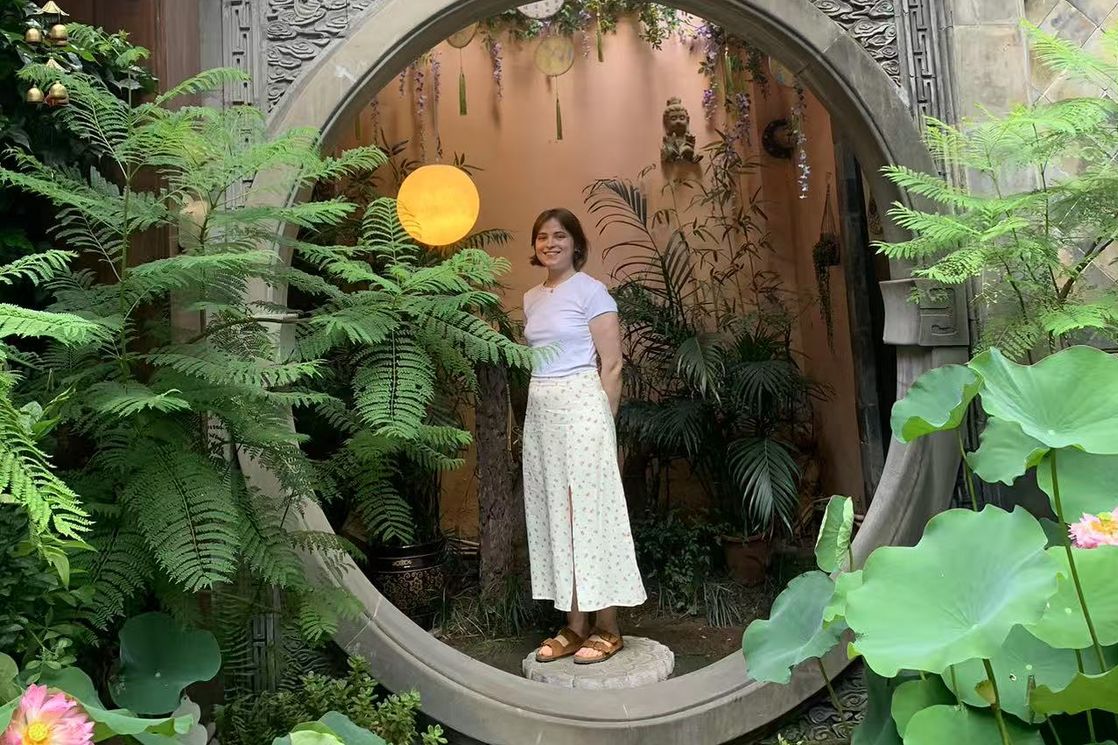
This was not the first trip to China for Daria Mazur—last year she went to Qingdao for the InterPore conference. ‘I was familiar with the country, from food and communication to technology like WeChat. During the programme, I carried out a project on modelling the properties of an alloy using molecular dynamics methods. The task included both modelling the ‘box’ in which the alloy is put, and applying machine learning methods to create a potential that would describe the system. In addition, I managed to work on my Moscow tasks (in particular, finishing an article). I also achieved another goal related to China—I visited the largest city in the world, Chongqing. The trip left me with a lot of positive memories and interesting acquaintances.’
See also:

‘Analytical Centres and Programmes for PhD Students’: HSE University–St Petersburg Offers New Formats of Cooperation with PRC
The Rope Shop Educational Space of HSE University–St Petersburg hosted a conference on the present and future of Russian–Chinese relations. Together with Luo Zhanhui, Consul General of China in St Petersburg, leading experts in Asian and African Studies discussed vectors for the long-term development of the countries, the synergy of joint projects, and future educational partnerships.
Transition to Sustainable Development Requires Deep Structural Transformation of Business
A group of researchers has proposed assessing the ESG transformation of businesses through the partner turnover ratio in raw material and distribution supply chains. The researchers note that the path towards sustainability requires a deep and often costly restructuring of partner networks. This and other papers were presented at the Third International Annual Conference ‘ESG Corporate Dynamics: the Challenges for Emerging Capital Markets.’
HSE University Hosts China Academy of Art Delegation to Strengthen Academic and Research Cooperation
On December 12, HSE University welcomed a delegation from the China Academy of Art — one of the most prestigious creative universities in Asia. The visit built on the dialogue launched in September and reaffirmed the mutual interest in collaboration outlined during the visit of Natalia Logutova, Deputy Director of the HSE Institute for Creative Industries Development, to the academy’s campus in Hangzhou. The parties discussed ideas that could form the foundation for long-term partnership—from digital reconstructions of historical spaces to joint educational programmes and research initiatives.
Eighth International U4U Online Seminar Unites Experts from 14 Countries
The HSE Online Campus hosted a two-day international U4U (Universities for Universities) seminar, which traditionally serves as a platform for exchanging expertise in online learning. This year, the event has reached a global scale, attracting international experts and representatives of universities from around the world. Together, they discussed key challenges and strategies for the development of online education. The online meeting was held in mid-November.
‘Keep Working, Keep Publishing—Consistency Matters’
Ziyuan Zhu, from Beijing, China, is an international PhD student at the Institute for Public Administration and Governance at HSE University in Moscow. In this interview with the HSE News Service, Ziyuan talks about how studies can influence one’s outlook on life, comparing public service models in different countries, and why being a Chinese student in Russia is advantageous in research.
Under a Blooming Magnolia: How Russian and Chinese Scientists Create Solar Cells of the Future
Schola continues to introduce the winners of the International Academic Cooperation competition. In today's issue, Professor Andrey Vasenko, Deputy Head of the Scientific and Educational Laboratory of Quantum Nanoelectronics at Tikhonov Moscow Institute of Electronics and Mathematics (MIEM), speaks about the joint project between his laboratory and the Peking University research team— ‘Engineering of highly efficient and stable perovskite solar cells.’
Physicists Propose New Mechanism to Enhance Superconductivity with 'Quantum Glue'
A team of researchers, including scientists from HSE MIEM, has demonstrated that defects in a material can enhance, rather than hinder, superconductivity. This occurs through interaction between defective and cleaner regions, which creates a 'quantum glue'—a uniform component that binds distinct superconducting regions into a single network. Calculations confirm that this mechanism could aid in developing superconductors that operate at higher temperatures. The study has been published in Communications Physics.
'Even among Geniuses, Luck Plays a Role in Winning a Nobel Prize'
Denis Bodrov studies particle physics and works at one of the four electron–positron colliders in the world. In this interview with the HSE Young Scientists project, he talks about his efforts to go beyond the Standard Model, discusses tau leptons, and shares his affection for Moscow.
Graduate School of Business MBA Students Take Part in Offsite Module in China
MBA students of the HSE Graduate School of Business HSHSE have recently completed the international component of their studies at the School of Economics and Management at Tsinghua University. The module focused on developing business through innovation. The participants discussed the impact of new technologies on corporate structures and visited companies operating in robotics and renewable energy.
Physicists at HSE University Reveal How Vortices Behave in Two-Dimensional Turbulence
Researchers from the Landau Institute for Theoretical Physics of the Russian Academy of Sciences and the HSE University's Faculty of Physics have discovered how external forces affect the behaviour of turbulent flows. The scientists showed that even a small external torque can stabilise the system and extend the lifetime of large vortices. These findings may improve the accuracy of models of atmospheric and oceanic circulation. The paper has been published in Physics of Fluids.