

HSE University Brings Together Researchers at International AI Summer Institute in Shanghai
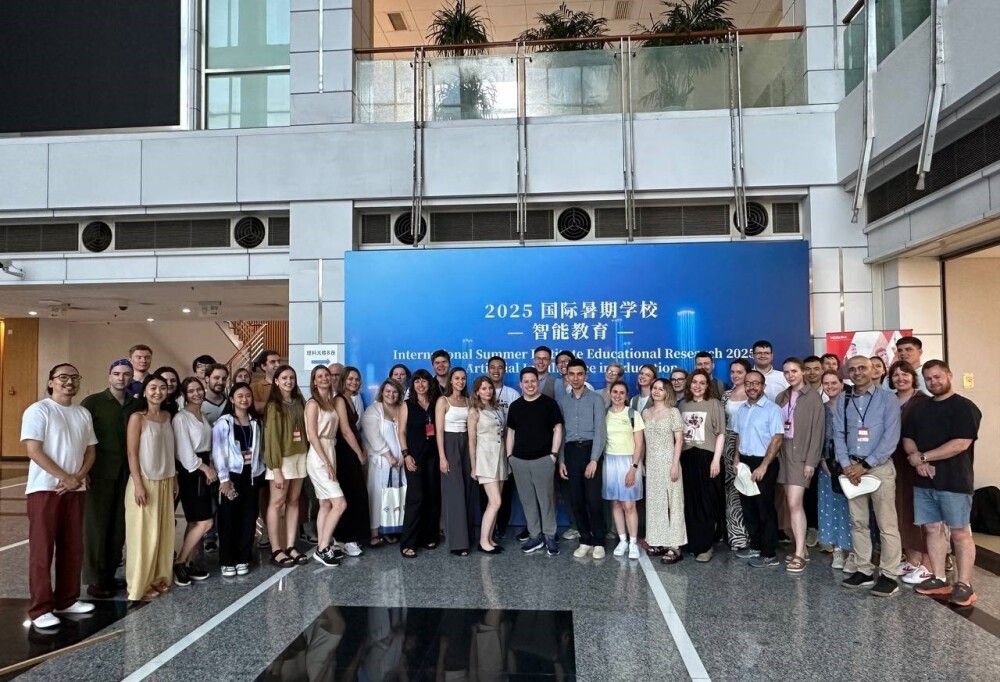
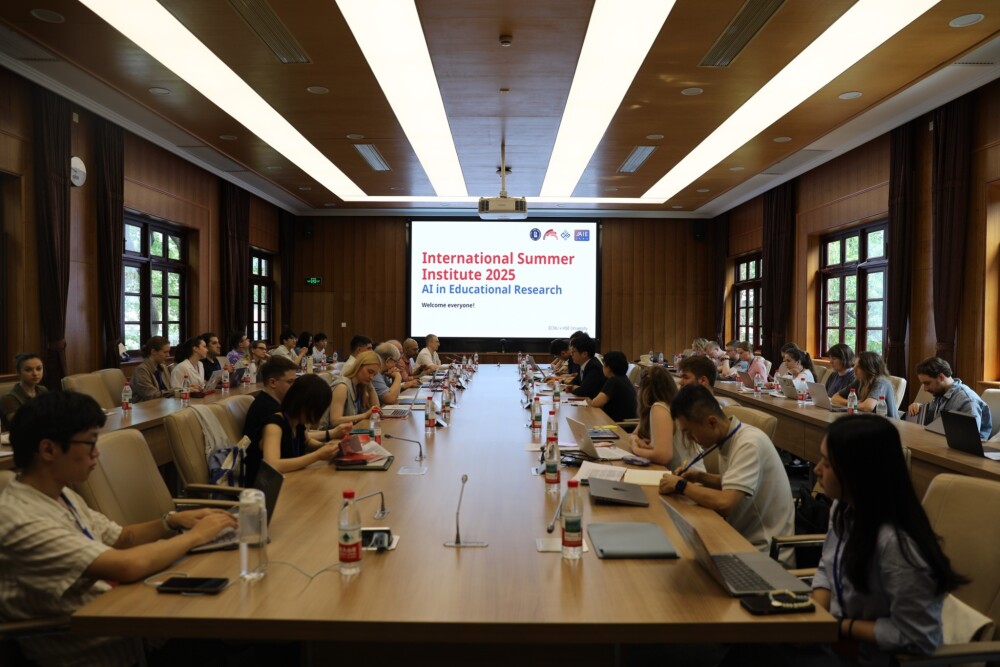


In early July 2025, the International Summer Institute on Artificial Intelligence in Education took place in Shanghai. It was organised by the HSE Institute of Education in cooperation with East China Normal University (ECNU). More than 50 early-career researchers and keynote speakers from nine countries—ranging from Russia and China to Canada and Singapore—gathered to share the latest findings from their work and to forge new international partnerships.
Opening the International Summer Institute, Evgeniy Terentev, Director of the HSE Institute of Education, emphasised that AI is no longer an abstract topic for discussion but has become ‘a tool for everyday academic practice, and the question now is not whether to implement it, but how to do so effectively.’

Evgeniy Terentev
The first day was devoted to setting the goals and objectives for the week’s work at the institute. Evgeniy Terentev presented an analysis of how Russian universities are responding to generative AI models, while Yaroslav Kuzminov, Academic Supervisor at HSE University, offered a global overview of how artificial intelligence is being integrated into higher education systems. Ekaterina Kruchinskaia illustrated, through concrete examples, how generative AI is being used by university students in Russia. Renowned international scholars Okan Bulut from the University of Alberta (Canada) and Mik Fanguy from the Education University of Hong Kong discussed the risks associated with the ‘black box’ of AI, and the need to rethink computer-supported collaborative learning in the era of large language models. The day concluded with an academic ‘speed dating’ session: participants not only found potential future co-authors but also had the chance to surprise and congratulate a fellow researcher whose birthday came to light unexpectedly.

Maksim Nikitin
‘It was crucial for us not only to deliver a rich academic programme, but also to strengthen our partnership with our Chinese colleagues,’ noted Maksim Nikitin, Expert at the HSE Institute of Education and Head of the 2025 Summer Institute’s Organising Committee. ‘East China Normal University is a reliable and engaged co-organiser. We already have several substantial joint projects with them, and we are certainly planning to expand that cooperation. It was especially gratifying to witness the international partnerships in action and to see such a high number of strong applications from all over the world. This shows that interest in AI in education is truly global—and HSE holds a leading position in this scientific field.’
The rest of the programme unfolded across three parallel academic tracks, where theoretical discussions gradually transitioned into practical workshops. The ‘Skills and Generative AI’ track hosted lively debate on the rapidly evolving labour market and how different theoretical frameworks describe these transformations.
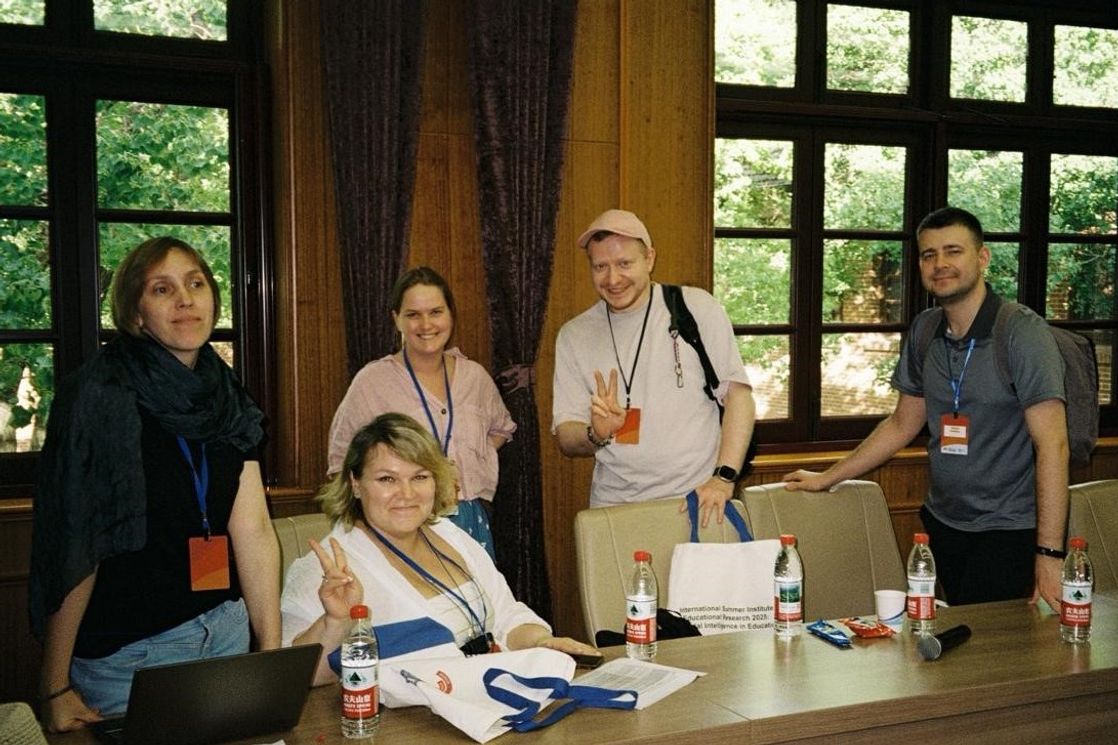

Vera Maltseva
‘Our Summer Institute proved to be genuinely interdisciplinary and international. It was encouraging to see that we managed to go beyond purely pedagogical and sociological approaches in analysing AI’s impact, incorporating crucial economic perspectives as well. This has allowed for a more holistic understanding of such a profound transformation. Thanks to this, we’ve expanded our network of professional contacts and partners, with whom we can now develop joint research initiatives,’ said Vera Maltseva, Director of the Centre for Vocational Education and Skills Development and mentor of the track.
The pedagogical track focused on the use of generative AI directly in the learning process, while the psychometrics track explored how to validate tests and conduct data analysis in education, with some functions handed over to AI assistants.
On one of the days, participants swapped laptops and notebooks for cameras, ascending the Shanghai Tower, strolling through the Yu Garden, and later enjoying a river cruise on the Huangpu while watching the summer sunset.

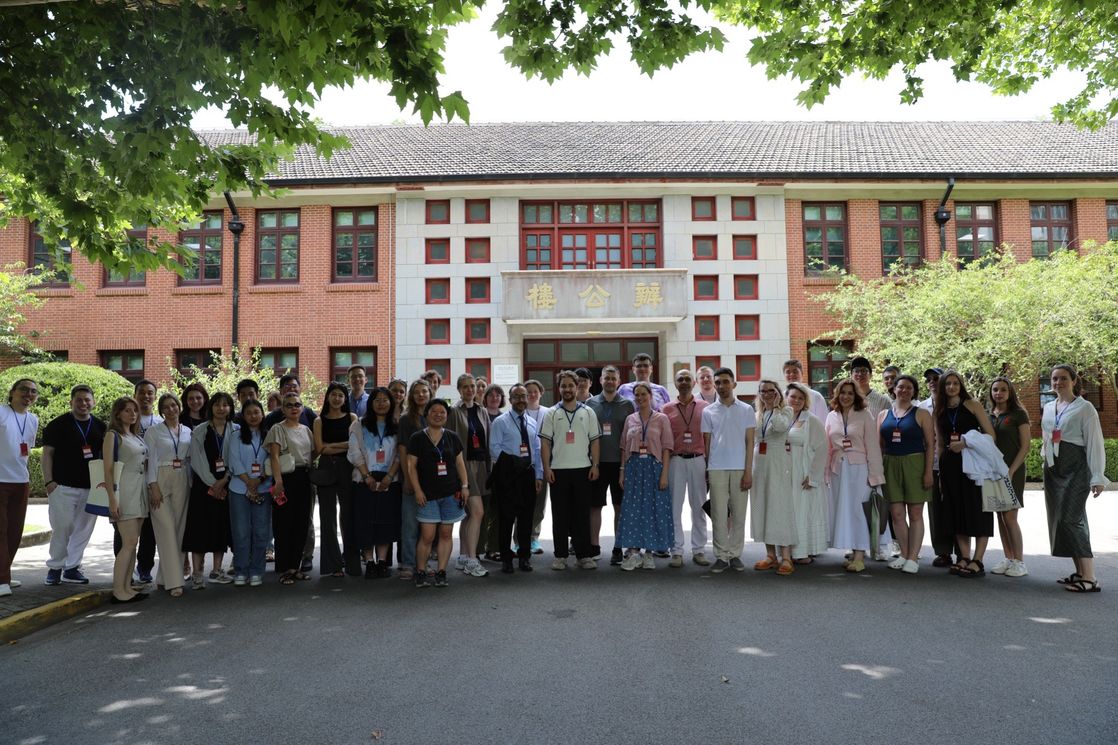
The Summer Institute concluded with the presentation of participants’ research projects. These included a variety of concepts—from an adaptive assistant for school pupils to a study of how generative AI is used in doctoral education. Experts provided detailed feedback and recommendations on how to strengthen the projects, and together with the participants identified key areas for further development.
‘It was a great honour and pleasure to be part of this year’s International Summer Institute hosted by the HSE Institute of Education. I was especially impressed by the lectures on the first day—the depth and scale of the ideas presented by the speakers gave me a lot to reflect on in my own research. I am grateful to Vera Maltseva and all the colleagues for their constructive feedback—their comments were not only motivating but also appropriately challenging, which really helped me clarify my next steps. This was an exceptionally valuable experience, and I sincerely hope our collaboration does not end with the institute. I look forward to opportunities for joint research with colleagues from HSE. I am confident this is only the beginning of a fruitful dialogue,’ shared Jade Zhao, a participant from China and student on the EdD programme at Xi’an Jiaotong-Liverpool University (XJTLU).


Closing the programme, Evgeniy Terentev thanked the participants for creating a ‘laboratory of collaboration,’ and the group agreed to continue working together in the future.
The next Summer Institute organised by HSE’s Institute of Education is scheduled for summer 2026. Applications will open in February.

See also:

HSE Graduate School of Business and Alfa-Bank Hold Summer School for Students from China
Twenty-seven students from Chinese universities took part in the international summer school ‘Digital Product Management’ organised by the HSE Graduate School of Business and Alfa-Bank. Over the course of a week, participants explored the Russian economy and business environment, learned about current technology trends, and worked through the key stages of digital product development step by step—from researching user needs and defining a problem to developing a prototype and presenting their final project.
Physicists Discover What Happens Inside a Stable Vortex
Large vortices with characteristic spiral arms are often observed in the atmosphere and the ocean. Physicists from HSE University have explained how these structures form and why they retain their shape. The researchers found that velocities at points located along the same vortex arc remain correlated even over long distances. At the same time, this correlation weakens rapidly with increasing distance from the vortex centre. These differences help explain the formation of spiral arms and may improve models of atmospheric and oceanic currents. The findings have been published in Physical Review Fluids.
HSE Computer Science Researchers Win Gold Medal at International Machine Learning Competition
A team comprising HSE International Laboratory of Statistical and Computational Genomics researchers Aleksei Shmelev and Nikita Chervov, 2025 graduate of the HSE Faculty of Computer Science’s Master’s programme in Data Analysis in Biology and Medicine Ivan Gevorkov, and two students from the United States achieved an outstanding result at the 2026 NeuroGolf international machine learning championship. The team won a gold medal and placed seventh overall.
‘Working with AI Solves a Wide Range of Engineering Problems’
Artificial intelligence is a working tool based on a balanced combination of algorithms and engineering. Experts and doctoral students from the HSE Moscow Institute of Electronics and Mathematics explain how AI technologies can improve an application, device, or system, and what engineering tasks are solved in the process.
‘The Peak of Stupidity’ and ‘The Valley of Despair’: HSE Economists Propose an Explanation for the Dunning–Kruger Effect
The Dunning–Kruger effect, which describes a sharp surge in self-confidence among beginners followed by an equally rapid decline as they gain experience, can be explained by the nature of the learning process and the acquisition of new knowledge. This conclusion was reached by Andrey Vorchik of the HSE Faculty of Economic Sciences together with independent researcher Murat Mamyshev. They developed a mathematical model of learning and demonstrated how subjective confidence is formed and changes as knowledge accumulates, as well as how teachers can reduce the ‘valley of despair’ experienced by learners.
Advancing Collaboration: HSE Faculty of Computer Science and Harbin Institute of Technology Hold Joint Seminar
From July 13 to 16, 2026, the Faculty of Computer Science hosted the Russian–Sino Research Seminar on Machine Learning Applications, organised by the HSE Laboratory for Cloud and Mobile Technologies in partnership with the Harbin Institute of Technology (China). A delegation comprising seven students and three university representatives travelled to Moscow to take part in an intensive four-day programme.
‘There’s a Big Practical Component in My Programme—That’s Especially Important in This Field’
Zou Jiaxu moved to Moscow from Heihe, China, at a young age. Having finished high school in Moscow, she decided to enrol in the Bachelor’s in Media Communications at the Institute of Media of the HSE Faculty of Creative Industries. Now in her second year of studies, Zou talked to the HSE News Service about the opportunities for practical experience available to HSE students, her volunteering and extracurricular activities, why learning Russian is a never-ending process, and the importance of making friends wherever you go.
A New Section on AI and a Prizewinning Paper: Early-Career HSE Researchers Take Part in IEEE EDM Conference
The 27th IEEE International Conference of Young Professionals in Electron Devices and Materials (EDM) has taken place in the Altai Republic. This year, researchers from HSE University presented the results of their research and were involved in organising a new section on artificial intelligence. A paper by HSE master’s student Rodion Sidorenko was awarded third place in the research paper competition at the conference.
‘AI Enables Researchers to Tackle More Complex and Important Problems’
In late July 2026, Dmitry Rybin, a graduate of the HSE Faculty of Mathematics who is now working in China, used ChatGPT to disprove a longstanding mathematical hypothesis. In an interview with the HSE News Service, he discussed AI's ability to make discoveries in mathematics, reflected on his time at HSE University, and spoke about his doctoral research at the Chinese University of Hong Kong.
HSE and Karakalpak State University Agree on Cooperation
HSE University and Berdakh Karakalpak State University have signed a cooperation agreement to strengthen collaboration in research, education, and innovation. Through the expertise of its Сentre of Digital Technologies for Nature-Based Solutions of the Carbon Measurement Supersites Programme, HSE University will work with colleagues from Uzbekistan to assess climate risks and evaluate opportunities for implementing nature-based climate projects in the region. The partners also plan to develop joint research and educational programmes.